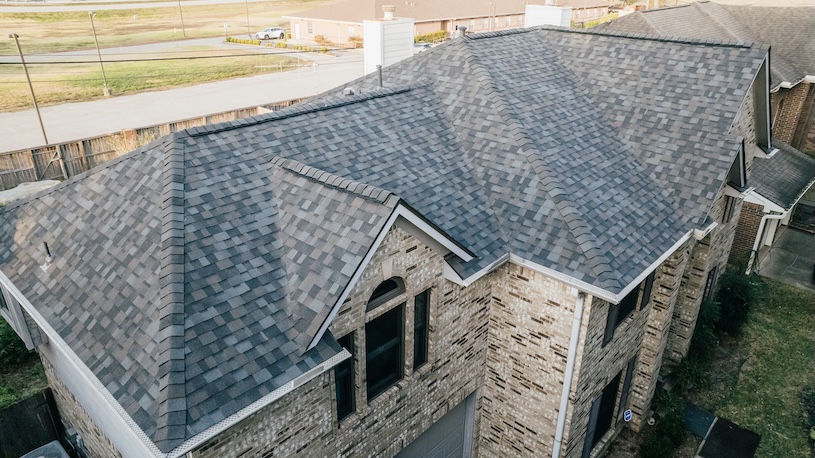

A Texas hail damage claim is not a single event, it is an 8 to 14 step process that runs over 30 to 120 days. Homeowners who treat it as "call insurance, get a check" routinely leave 20 to 40 percent of the legitimate claim value on the table. The carrier is not a partner. The adjuster is not your contractor. The claim only pays what is properly documented, properly scoped, and properly supplemented when the initial offer is short. This is the full Texas claim process, in order, with the decisions that matter at each step.
- How long do I have to file?
- Texas policies typically allow 12 months from date of loss, but earlier is dramatically better. File inside 30 days when the storm is fresh and documentable.
- Do I need a contractor before I file?
- Yes. A pre-claim inspection prevents you from filing a no-damage claim that lands on your CLUE record and raises premiums for 5 years.
- What does the adjuster pay for?
- Everything in the storm-loss scope: roof, gutters, screens, fences, AC fin damage, dented vents, paint scarring, sometimes interior water if there is a leak.
- Can I pick my own contractor?
- Yes, always. Texas law forbids carriers from forcing a specific contractor on you.
Free inspection for your the texas hail damage insurance claim process project
Tell us what you are dealing with and we will schedule a no obligation inspection. Prefer to talk? Call (713) 480-8877.
01 // Step 1: Document the date of loss before you call anyone
The single most important thing you can do is establish a verifiable date of loss. Pull the NOAA Storm Events Database (ncdc.noaa.gov/stormevents), filter by your county and the date range, and screenshot any documented hail or wind event over your zip code. Save it. This is the foundation of every claim that follows; without it, an adjuster can argue "wear and tear" and pay nothing. Our Houston hail history post lists every major Harris County event since 2020 with exact dates.
02 // Step 2: Get a free pre-claim inspection
Before calling the carrier, get a written, photo-documented inspection from a reputable local contractor. The contractor walks the roof, marks every hail strike with chalk, photographs each one with a reference scale, and gives you a written report. If the damage is real and exceeds your deductible, you file. If the damage is cosmetic only or below your deductible, you do not file. Filing a no-payout claim still goes on your 5-year CLUE record and can affect your renewal premium.
03 // Step 3: Call the carrier's claims line and open a claim
Call your carrier's dedicated claims number (on the back of your insurance card), not your local agent. Have ready: policy number, date of loss, brief description ("hail damage to roof and gutters"), and your contractor's contact if asked. You will get a claim number and a target window for the adjuster visit, usually 5 to 14 days out. Write down everything: claim number, representative name, time stamp.
04 // Step 4: Schedule the adjuster visit on a day your contractor can be there
This is non-negotiable. The adjuster will walk the roof in 30 to 45 minutes and miss damage. A reputable contractor on site walks every elevation with the adjuster, points out every chalked strike, photographs the conversation, and corrects under-scoping in real time. Carriers will not tell you this is allowed; it always is. Schedule the adjuster window in coordination with your contractor.
05 // Step 5: The adjuster visit and the scope sheet
The adjuster takes photos, marks strikes, and produces a written estimate (the "scope sheet") in Xactimate, the industry standard estimating software. You will receive the scope within 5 to 15 days of the inspection. Read every line. Cross-check against your contractor's independent scope. Common omissions: starter strip, drip edge upgrade, ice and water shield at penetrations, code-required ventilation upgrades, ridge cap, dump fees, and detach-and-reset on solar panels, satellite dishes, or rooftop AC units.
06 // Step 6: Compare the scope and decide whether to supplement
Your contractor compares the carrier's Xactimate scope to a true replacement scope. If the carrier missed line items or used outdated price-list values, your contractor writes a supplement: a line-item document with photos and Xactimate quantities that justifies an upward revision. Texas adjusters underscope by 15 to 40 percent on most hail claims; supplements are routine, not adversarial. A good Houston contractor handles this at no extra charge.
07 // Step 7: Approval of the supplement (or denial)
The supplement goes back to the carrier, which either approves, partially approves, or denies. Approved supplements result in an updated scope and an updated payment. Denied or partially approved supplements get a written response that becomes the basis for a re-inspection request. Re-inspections, when warranted, are won far more often than not when the contractor's documentation is strong.
08 // Step 8: Understand RCV vs ACV payment structure
If you have a Replacement Cost Value (RCV) policy, the carrier pays in two checks: the first (the ACV check) covers depreciated value of the roof minus your deductible, issued at scope approval. The second (the recoverable depreciation, or RCV release) is held until the work is completed and invoiced. You must complete the work and submit the final invoice within the policy window (often 6 months) or the depreciation amount is forfeited. ACV-only policies pay one check (depreciated value) and you cover the difference.
09 // Step 9: Mortgage company endorsement (if applicable)
If you have a mortgage, the insurance check is typically made out to you and your mortgage company jointly. The mortgage company holds the funds in escrow and releases them in tranches as work is completed and inspected. This adds 7 to 21 days to the process. Start the mortgage endorsement paperwork the day you receive the ACV check; do not wait for the work to start.
10 // Step 10: Sign the contract and pull permits
Once the scope is approved and funds are flowing, sign the itemized roofing contract (see our contractor selection guide). Your contractor pulls the permit in your name. Material delivery and crew scheduling typically happen within 1 to 3 weeks of contract signing during peak season.
11 // Step 11: Installation and final inspection
Most Houston residential reroofs take 1 to 3 days for asphalt, 4 to 7 days for metal. The city or county inspector signs off on tear-off (sometimes) and final (always). Your contractor provides photo documentation of every flashing, every penetration, and every code-required line item.
12 // Step 12: Final invoice and RCV release
Your contractor submits a final invoice that matches or exceeds the approved scope. The carrier issues the recoverable depreciation check (RCV release). If your mortgage company is on the check, they release funds based on photo documentation and inspection sign-off. Final payment to the contractor closes the claim.