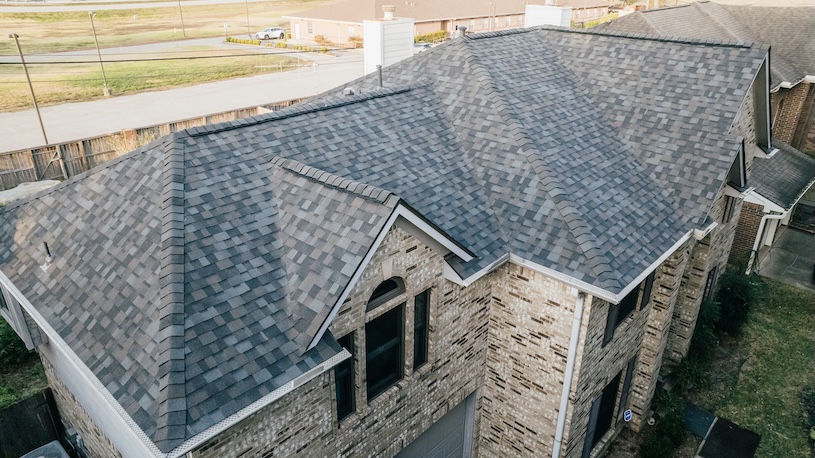
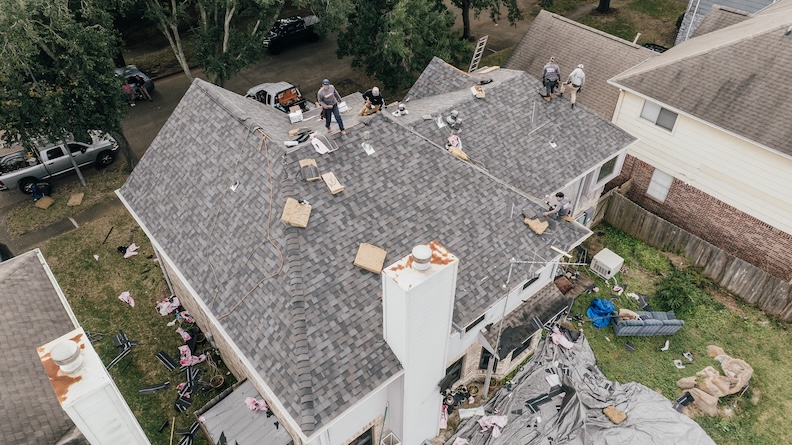
Houston does not get one storm season. We get three. Spring hail rolls through from late February to May, the official Atlantic hurricane season runs June 1 through November 30, and the back end of fall delivers the cold-front gust events that finish off any roof the summer left tired. The houses that survive these cycles intact are not luckier than yours, they were prepared earlier. This is the twelve-item preseason audit our crew runs on every inspection from the Heights to Katy.
- When should I do this?
- Finish the list by May 15. NOAA names its first Atlantic system on average by June 20, but the spring hail belt over Harris County is fully active by early March.
- DIY or contractor?
- Items 1, 4, 7, 8 and 12 are homeowner-safe with a ladder and a phone camera. The rest involve roof access or attic crawls and should be handled by a licensed contractor.
- What does an inspection cost?
- Nothing through Invictus. Free drone and on-roof inspection inside 24 hours, written report with photos same day, no obligation.
Free inspection for your houston storm season checklist project
Tell us what you are dealing with and we will schedule a no obligation inspection. Prefer to talk? Call (713) 480-8877.
01 // Walk the perimeter and survey shingle field
Stand at each corner of the house and look up at the slopes you can see. You are looking for three things: missing tabs, lifted tabs flapping in the breeze, and dark patches where granules have washed off and exposed the asphalt mat. Take a photo of every elevation. A roof that loses 10 percent of its granule field in one season is on a 5 to 7 year decline curve, not a 20 year one.
The most common Houston failure is not blow-off, it is wind-creep. Tabs that look fine from the curb are unsealed at the back edge from a 2024 microburst and the next 60 mph gust will fold them. A contractor with a cordless caulk gun and a tube of asphalt cement can re-seal an entire elevation in 90 minutes for a few hundred dollars.
02 // Inspect every penetration and flashing detail
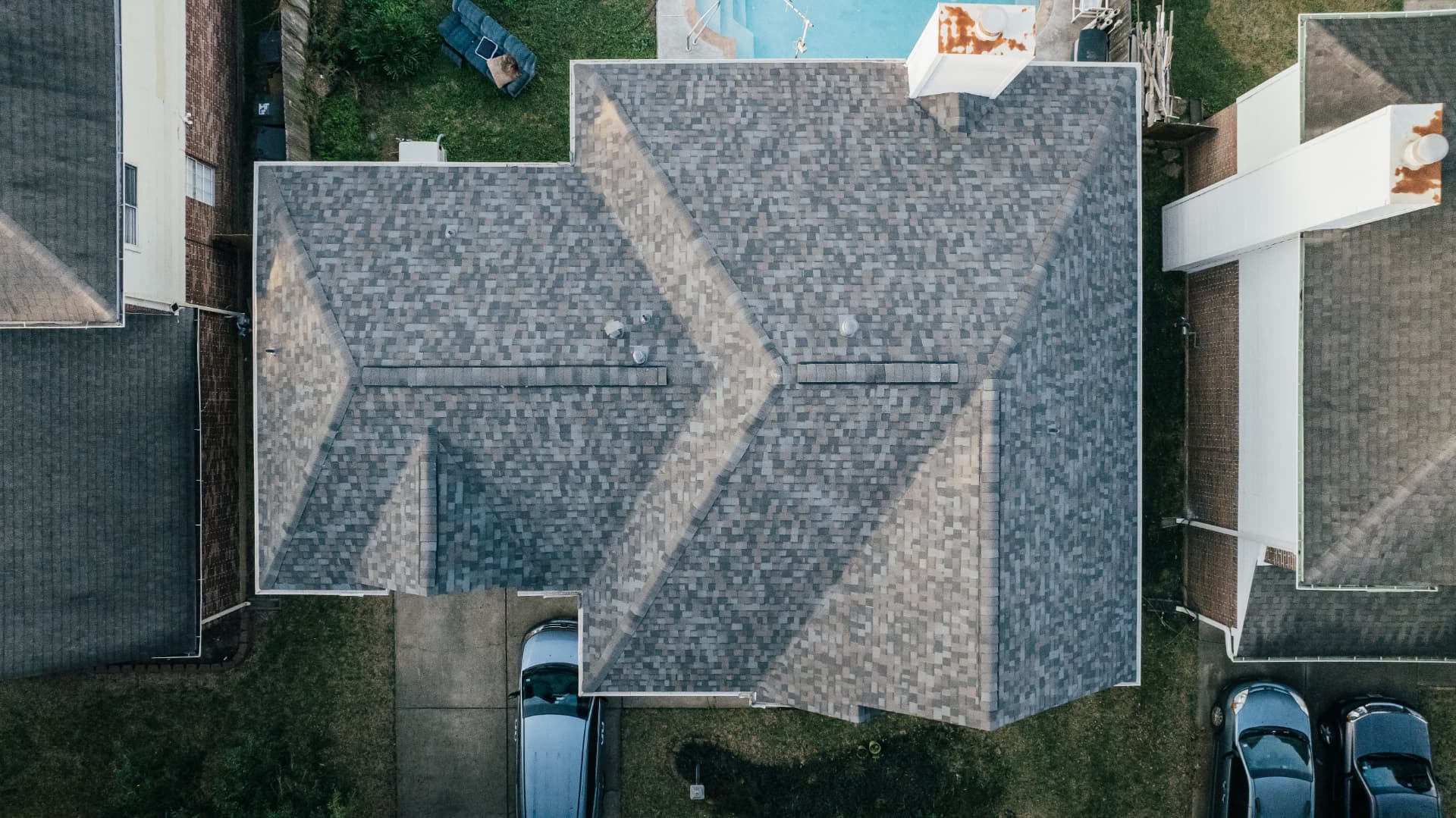
Roofs do not leak through shingles, they leak through holes. Every plumbing vent, bathroom fan, attic exhaust, chimney, skylight, and roof-to-wall transition is a hole that has been sealed. Each of those seals has a service life of 8 to 15 years, and Houston UV chews through pipe boots fastest of all.
From the ground with binoculars, look for cracked rubber, lifted step flashing, and counter-flashing pulling away from masonry. Replace any boot older than 10 years, or upgrade to a lead jack with a stainless storm collar that lasts the life of the roof.
03 // Clean and re-pitch the gutters
A clogged gutter is a swimming pool against your fascia. During a 4-inch-per-hour Gulf squall, a 5-inch K-style gutter handles 1,200 gallons per minute on a 2,000 sq ft roof. Plug that with two months of pecan catkins and the water has to go somewhere, which usually means behind the fascia, into the soffit, and down the wall cavity.
Flush every downspout with a hose. Re-secure any hidden hangers that have pulled, and confirm the pitch is at least 1/4 inch per 10 feet running toward the downspout.
04 // Confirm soffit ventilation is open
Houston attics hit 145 degrees in July. The only thing keeping that heat from cooking your shingles from below is balanced intake-and-exhaust ventilation. Most homes were built with vented soffit panels, but two decades of paint, wasp nests, and blown-in insulation packed against the eave have closed off the intake side.
From outside, look up at the soffit. You should see continuous slot vents or perforated panels with clear openings. Inside the attic, shine a light at the eave. You should see daylight through the baffles.
05 // Get tree limbs 10 feet off the roof
Live oaks scrape granules off shingles every time the wind blows. Pine branches drop sap that traps debris and holds moisture against the roof. In a named storm, any limb within reach of the roof becomes a missile. Hire a certified arborist before May, not after the first storm warning when every tree service in Houston is booked solid for 6 weeks. The 10-foot rule is a minimum; for oaks and pines we recommend 15 feet of clearance.
06 // Walk the attic and look up
Twenty minutes in the attic with a flashlight tells you more about the roof than any drone can. Look for daylight where it should not be, water staining on the underside of the decking, rusted nail heads (a sign of chronic moisture), and disconnected bathroom fan ducts venting into the attic instead of through the roof. A dark stain shaped like a teardrop under a vent boot means that boot is leaking, even if no water has reached the ceiling yet.
07 // Inspect siding, caulk lines, and window seals
Wind-driven rain finds the wall before it finds the roof. Walk every elevation and run a fingernail along the caulk joint where window flange meets siding. If the caulk is cracked or pulling away, water is wicking behind it on every storm. Re-caulk with a 50-year urethane, not a 5-year acrylic. On Hardie, look for hairline cracks at butt joints and field nail heads that have popped.
08 // Brace the garage door
A garage door is the largest single opening in your house and the most common point of catastrophic failure in a hurricane. Once the door blows in, the house pressurizes from the inside and the roof goes from outside-pressure failure to inside-pressure failure, which is how you lose the entire structure instead of just shingles. If your door is older than 2008 and not specifically wind-rated, install a bracing kit before June.
09 // Document everything before the storm
The single best thing you can do for a future insurance claim is take dated photos of the roof, every elevation, the attic, and any pre-existing damage right now. Walk the property with your phone in panorama mode. Email them to yourself so they are time-stamped on a server you do not control. When a 2-inch hailstone lands on your roof in April, the adjuster will argue that the marks were already there. Photos from January end that argument before it starts.
10 // Read your homeowners policy
Most Houston homeowners do not know whether their policy is Replacement Cost Value (RCV) or Actual Cash Value (ACV) until they file a claim. ACV depreciates the roof by age and pays a fraction of replacement cost. The difference can be $20,000 on a single claim. Confirm three things in writing: settlement type, wind/hail deductible (often 1 to 2 percent of dwelling coverage), and whether your carrier has added a cosmetic damage exclusion.
11 // Check site drainage and grading
Houston soil is expansive clay. It swells when wet and shrinks when dry, which moves foundations and opens cracks in brick veneer. Walk the perimeter after the next thunderstorm and look for ponding within 5 feet of the foundation. French drains, downspout extensions, and re-graded swales are cheap insurance compared to a $40,000 foundation lift.
12 // Build your post-storm phone tree now
Save four numbers in your phone before June: your insurance carrier's claim hotline, your local roofing contractor's office line (not a sales rep cell), a board-up service for emergency tarps, and a tree removal company. Out-of-state contractors that show up with door knockers after a named storm are not on this list. They will not be in Houston in November when your supplement gets denied.