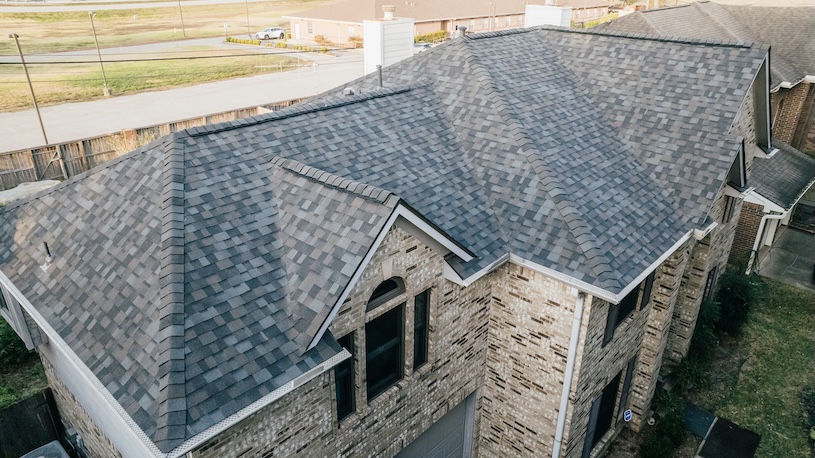
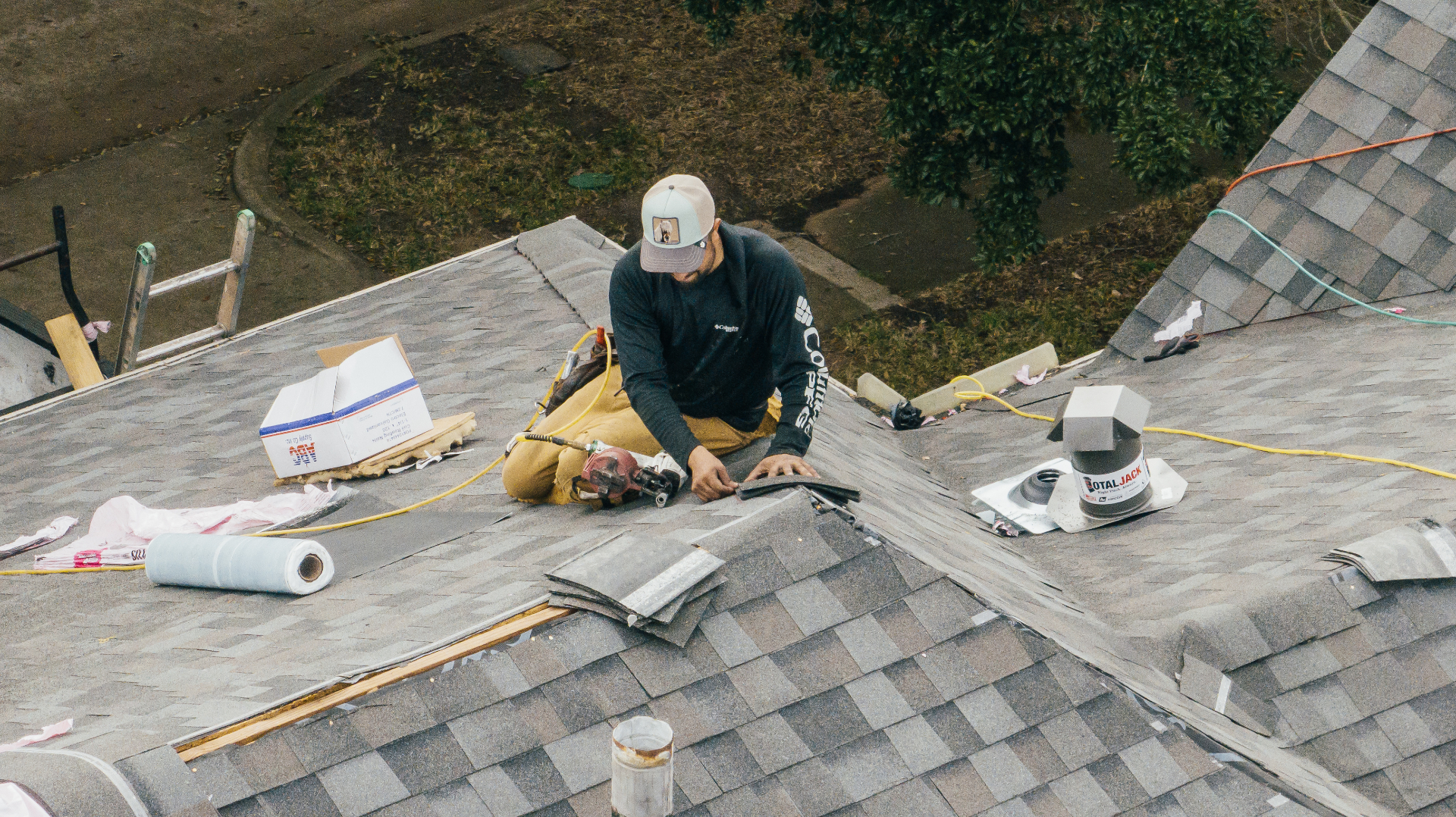
Greater Houston sits inside three of the most active severe-weather corridors in North America: the Gulf Coast hurricane lane, the Texas hail alley, and the squall-line wind belt that runs from Cypress through The Woodlands. Most years a Houston homeowner sees at least one storm capable of damaging a roof, and most years that damage goes uninspected and uncompensated. We respond to storm-damaged roofs across the metro the same day, document everything for your insurance carrier, and stay with you through the supplement, the depreciation release, and the final inspection.
- Same-day tarping?
- Yes for active leaks during daylight hours, 24 hours otherwise. (713) 480-8877.
- Wind and hail covered?
- Yes on every standard Texas HO-3 policy. Flood is not.
- Free inspection?
- Always. Drone, on-roof, written report, photos, no obligation.
- Areas served?
- All of Greater Houston including Heights, Memorial, Katy, Sugar Land, The Woodlands, Cypress, Pearland.
Free inspection for your storm damage roof repair houston project
Tell us what you are dealing with and we will schedule a no obligation inspection. Prefer to talk? Call (713) 480-8877.
The four kinds of storm damage we see in Houston
Wind damage is the most common and the most under-claimed. A 70 mph gust can break the factory sealant bond on architectural shingles without visibly displacing them. The shingle still looks flat from the ground but lifts in the next breeze and lets water under. We find this with a chalk-line lift test on every inspection.
Hail damage bruises the asphalt mat and dislodges granules. We cover this in detail on the hail damage repair page, including how to verify hail size against NOAA records.
Hurricane damage combines wind, wind-driven rain, and projectile impact from neighborhood debris. After Hurricane Beryl in 2024 we documented thousands of roofs with intact shingle fields but failed flashing, ridge caps, and roof-mounted equipment. The leaks showed up two weeks later when the next afternoon thunderstorm rolled through.
Falling debris from oak limbs, pine tops, and detached trampolines puts holes in roofs every year. We carry decking, underlayment, and shingles on every truck so we can dry in same-day.
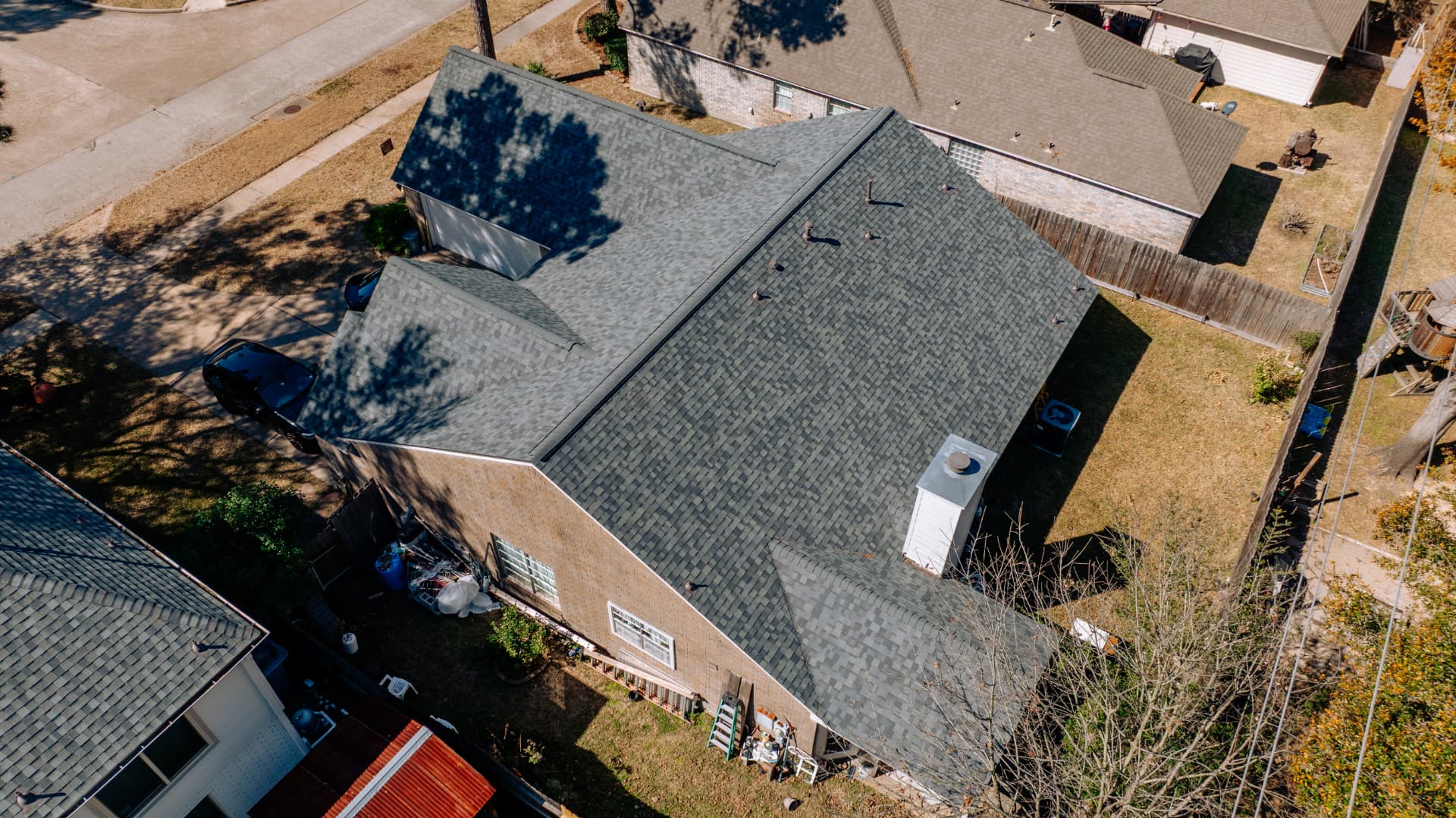
Emergency response: what happens in the first 24 hours
If you have an active leak, do three things in this order: protect interior contents with plastic and buckets, photograph everything before you move it, then call us. We dispatch a tarp crew with FEMA-spec 20x25 reinforced poly, anchored to 1x3 furring strips screwed (not stapled) into the deck. A properly installed emergency tarp lasts 60 to 90 days, long enough to get through the claim.
Texas insurance policies require you to mitigate further damage. A homeowner who lets a leak run for two weeks to "wait for the adjuster" gives the carrier grounds to deny interior damage that occurred after the loss date. Tarp first, then file the claim, then schedule the adjuster.
Filing the storm claim the right way
Call your insurance company directly. Get a claim number and an adjuster appointment. Do not sign an Assignment of Benefits with any contractor before the adjuster meeting. AOBs are legal in Texas but they hand the contractor the right to sue your insurer in your name, and that fight rarely benefits you.
Have your contractor on the roof with the adjuster on the day of the inspection. Two pairs of eyes, two reports. The adjuster's scope and our scope are then reconciled in a supplement if items were missed. Industry data from the National Association of Public Insurance Adjusters shows supplemented claims average 25 to 40 percent higher than the initial offer when documentation is thorough.
For a deeper walkthrough of contractor selection after a storm, the Texas Department of Insurance storm guide is the clearest single resource.
What is included in a storm damage roof repair
A real storm repair is more than swapping a few shingles. It includes deck inspection for hidden water intrusion, replacement of any rotted plywood or OSB, new underlayment in the affected zones, ice and water shield in valleys and around all penetrations, new pipe boots and roof vents, ridge cap replacement, and color-matched finish layer. We also re-seal exposed nails, replace damaged drip edge, and document everything for your insurance file.
If more than 25 percent of any single slope is damaged, most insurers (and most building codes) treat it as a full replacement candidate. Texas matching statutes also support full replacement when matching shingles are no longer manufactured in your color and profile.
Hardening a Houston roof against the next storm
You cannot stop a hurricane but you can choose materials and details that survive one. We default to Class 4 impact-resistant architectural shingles with six-nail attachment patterns rated for 130 mph winds, ring-shank nails into the deck, and ridge vents secured with stainless screws rather than the staples shipped with most kits. The IBHS FORTIFIED Roof program publishes a complete checklist at fortifiedhome.org/roof. Roofs built to FORTIFIED standards have demonstrably better insurance outcomes after named storms.
Pair the new roof with hurricane impact windows and reinforced entry doors and you have a building envelope that holds up to a Category 2 without breach.
Commercial and multifamily storm response
We service commercial flat roofs across Greater Houston: TPO, modified bitumen, and built-up systems for warehouses, retail strips, churches, and small office buildings. Emergency patching is dispatched within 4 hours during business hours. Full tear-off and re-roof projects are coordinated around tenant operations with night and weekend work available.
Same-day emergency tarp
FEMA-spec poly, screw-down anchoring. (713) 480-8877 reaches the on-call tarp crew.
Insurance documentation included
Drone footage, on-roof photos, written narrative, and Xactimate-format scope.
Permits in your name
City of Houston or applicable municipal permit pulled before any tear-off begins.
Class 4 hail-rated upgrade
Standard on every storm replacement. Eligible for Texas insurance discount.
Lifetime workmanship warranty
Direct from us, transferable to next owner.
No deductible games
Texas Insurance Code §707.002 compliant. We never absorb or rebate the deductible.