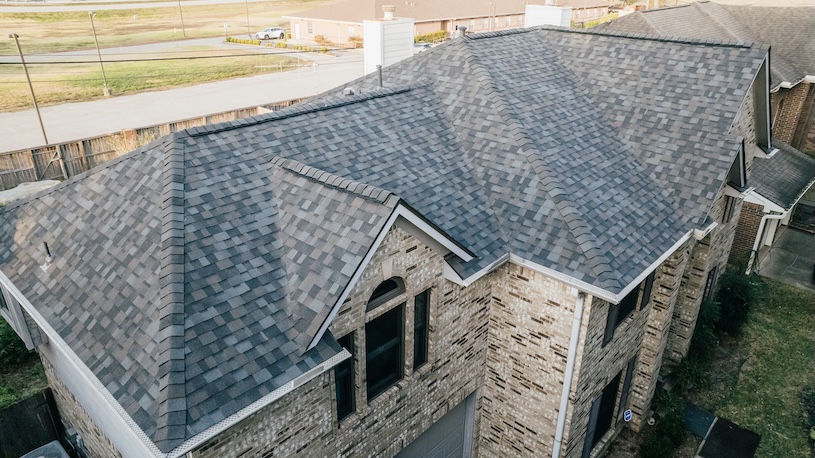
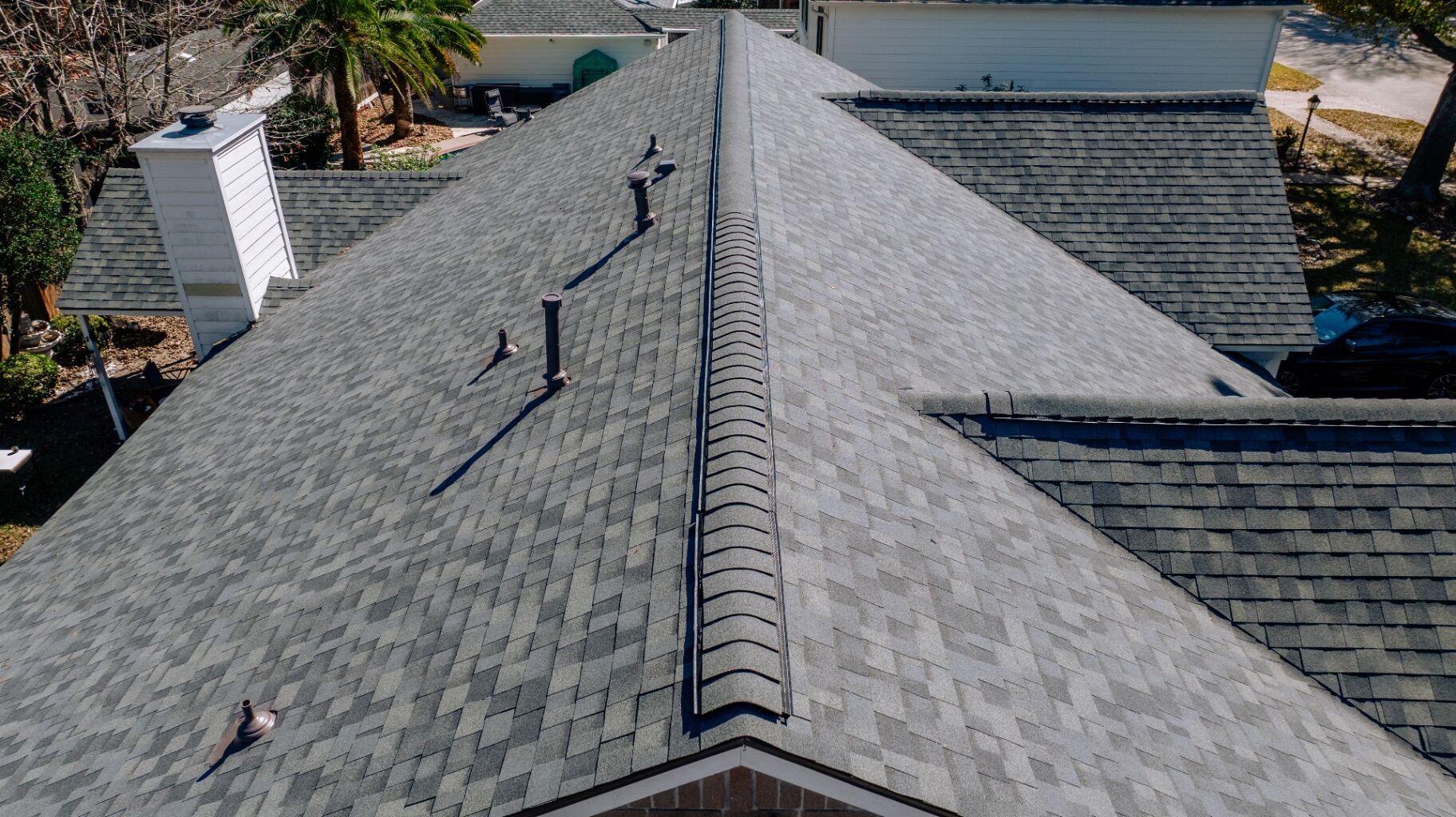
The short answer: most Houston asphalt shingle roofs last 15 to 22 years, not the 25 to 30 printed on the manufacturer warranty. Gulf Coast UV, the spring hail belt across Harris County, and 90 percent summer humidity all chew through shingles roughly 20 to 40 percent faster than the national average. The longer answer is that ventilation, slope orientation, and color matter more than brand, and a poorly vented south-facing 25-year shingle in Cypress can give up at year 12 while a properly vented north slope in Memorial pushes 25.
- Average asphalt roof life in Houston?
- 15 to 22 years for architectural shingles. 10 to 14 years for older 3-tab shingles. Compared to a 25 to 30 year national average.
- What about metal?
- 40 to 60 years for standing seam steel or aluminum. Often the last roof you will ever buy on the house.
- Tile?
- 40 to 50 years for concrete tile, 75 to 100 for clay or slate. Underlayment underneath needs replacement every 25 to 30 years even if the tile itself is intact.
- How do I know if mine is at end of life?
- Granule loss in gutters, dark patches where the asphalt mat is exposed, lifted or curling tabs, and any leak around a vent or chimney are the four signs. Free inspection settles it.
Free inspection for your how long does a roof last in houston? project
Tell us what you are dealing with and we will schedule a no obligation inspection. Prefer to talk? Call (713) 480-8877.
01 // Real service life by material in Houston
3-tab asphalt shingles. 10 to 14 years. Almost no one installs these new anymore, but if your home was built before 2005 and never re-roofed, this is what is up there. They were rated for 20 to 25 years; Gulf Coast UV cuts that nearly in half.
Architectural (laminate) asphalt shingles. 15 to 22 years. The default for 80 percent of Houston homes today. Brand matters less than ventilation and color. Lighter colors run 3 to 5 percent cooler attic temps and add 1 to 2 years of service life on south slopes.
Designer / luxury asphalt shingles. 20 to 28 years. Heavier shingles (GAF Camelot, CertainTeed Grand Manor, Owens Corning Berkshire) with better wind ratings and thicker laminate construction. Slightly more resistant to Gulf Coast aging.
Stamped metal shingles (DECRA, etc.). 40 to 50 years. Class 4 impact rated, lighter than tile, mimics slate or shake. Eligible for Texas insurance hail discount.
Standing seam metal. 40 to 60 years. The longest-life mainstream Houston option. PVDF finishes (Kynar 500) carry 50-year fade warranties. Premium upfront cost, lowest lifetime cost.
Concrete tile. 40 to 50 years on the tile, 25 to 30 years on the underlayment beneath. Common in Sugar Land, Cinco Ranch, and Memorial Villages master-planned communities.
Clay tile and natural slate. 75 to 100 years on the tile itself. Same 25 to 30 year underlayment cycle. Common in River Oaks, West U, and high-end Memorial.
Modified bitumen / TPO (low-slope sections). 12 to 20 years. Most Houston homes with low-slope sections (back porches, modern flat roofs) need a separate replacement cycle from the main pitched roof.
02 // The four factors that decide whether yours hits 12 years or 22
Ventilation balance. The single biggest factor. A roof with proper soffit-to-ridge ventilation runs an attic 15 to 25 degrees cooler than an under-vented roof. Cooler attic = slower shingle aging from below. Most Houston tract homes built 1995 to 2010 shipped with decorative ridge venting that does not actually vent and undersized soffit intake. Fix this and you add 3 to 6 years to the roof.
Slope orientation. South and west slopes age 30 to 50 percent faster than north slopes in Houston due to UV and afternoon heat exposure. A 20-year roof can have year-12 south slopes and year-22 north slopes on the same house.
Shingle color. Darker colors absorb more solar radiation and run hotter. A black architectural shingle can run 20 degrees hotter than the same shingle in weathered wood or driftwood. Over two decades that is real service life lost.
Tree cover and debris load. A roof under heavy live oak or pine canopy (Memorial, Kingwood, The Woodlands) runs cooler in summer but stays damper, which encourages algae streaks on north slopes and accelerates fastener corrosion. Tree-strike damage in named storms is also a major shortener. Trim canopies back 10 to 15 feet from the roof and the system lasts longer.
03 // The four signs your roof is at end of life
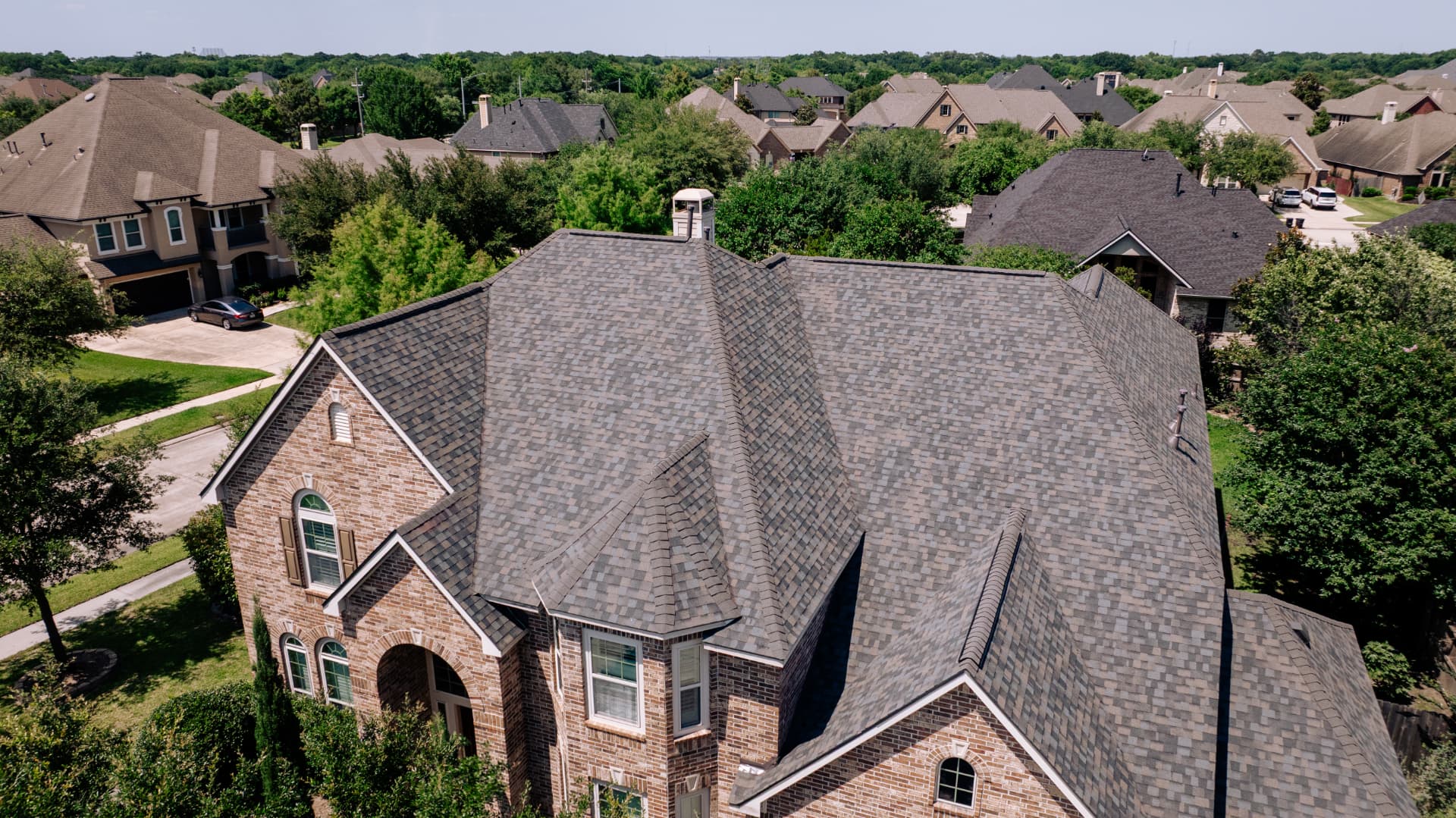
Granules in the gutters. Asphalt shingles are sacrificial; the granules wash off over time and the asphalt mat underneath degrades in UV. A heavy granule load in your gutters or downspouts (the texture of coarse sand) means the shingles are losing their UV protection. Past a certain point this accelerates rapidly.
Dark patches on the roof field. Where granules are gone, the black or dark grey asphalt mat shows through. Spot these from the curb with binoculars. Patches larger than a dinner plate indicate localized end-of-life.
Lifted or curling tabs. Tabs that curl at the edges or lift off the deck have lost their adhesive bond and will blow off in the next 60 mph gust. Repair on a localized section, replace the field if widespread.
Leaks at penetrations. The first leaks on an aging roof almost always show up around plumbing vents, chimneys, or skylights. Pipe boots are rated for 8 to 15 years; in Houston UV they fail at the short end of that range. A leak around a penetration is repairable; multiple leaks across the field is end of life.
04 // How to extend the life of the roof you have
Three things buy you years on an existing roof. First, replace the pipe boots and re-seal flashings at the 10-year mark. Cheap insurance, big payoff. Second, fix the ventilation balance. Adding continuous ridge venting and clearing blocked soffit intake is a one-day job that can drop attic temps 15 to 20 degrees. Third, keep tree limbs 10 to 15 feet back and clean gutters twice a year. Most premature failures we see were preventable with these three steps.
A free inspection (drone plus on-roof) tells you exactly where on the lifespan curve your roof actually sits. We do these inside 24 hours of your call, with a written photo report the same day, no obligation. See our free roof inspection page for what is included.
05 // When to repair vs replace
Repair makes sense if the roof is under 15 years old, the damage is localized to one elevation or a few penetrations, and the rest of the field is in good condition. Replace makes sense if the roof is over 18 years old, multiple elevations show end-of-life signs, or you are filing an insurance claim for storm damage on an aging roof. A patch on a 20-year roof is throwing money at a system that will need full replacement in 2 to 3 years anyway. We tell you the truth on inspection, not a script.