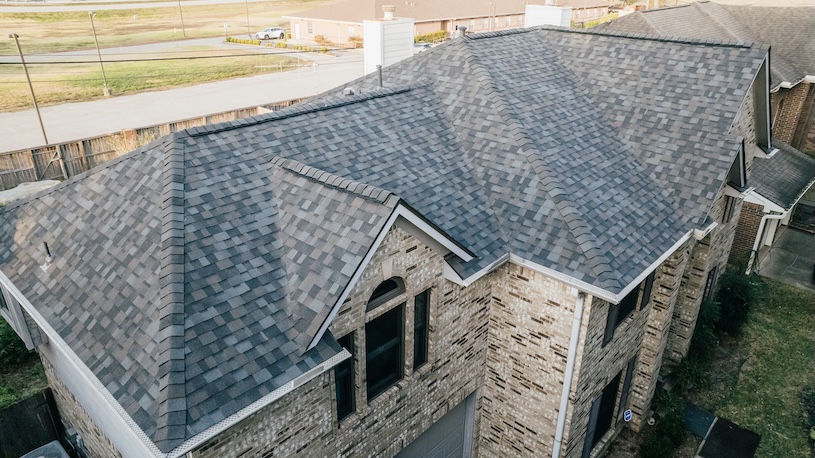
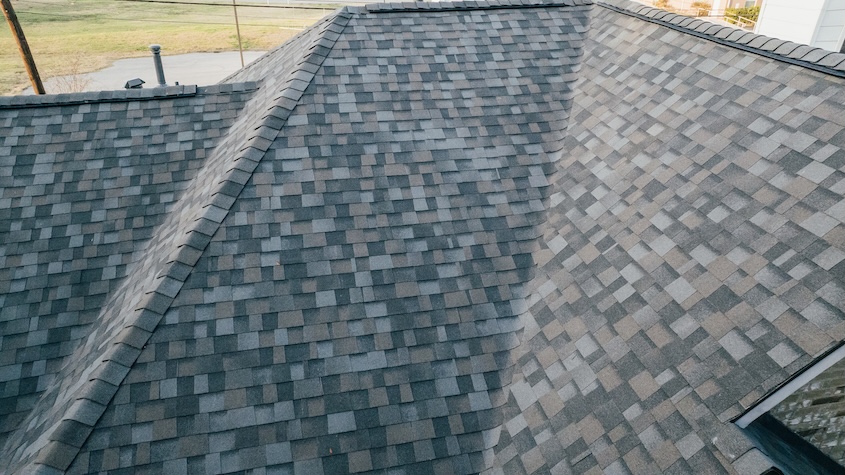
Hail damage on a Houston roof is almost never as dramatic as homeowners expect. There is no hole, no missing chunk, no obvious caved-in spot. The damage is small, circular, and often invisible from the curb. It also costs the same to repair whether you spot it on day one or year three, which is why knowing what to look for matters. This guide shows you what real hail damage looks like on each roofing material, what to photograph, and when to call.
- Can I see hail damage from the ground?
- Rarely on the roof itself. But collateral damage on gutters, downspouts, window screens, and AC fins is usually visible and is the best ground-level clue.
- Should I climb on the roof?
- No. Wet shingles are slick, granules are loose, and you can void warranties or hurt yourself. Use binoculars or a phone with optical zoom from the ground.
- How long after a storm should I check?
- Within 7 days. The longer you wait, the harder it is to distinguish storm damage from wear-and-tear in the carrier's eyes.
- What size hail causes damage?
- Asphalt shingles can be damaged by hail as small as 1 inch. 1.5 inch hail causes widespread damage. See our companion post on hail size and damage thresholds.
Free inspection for your how to spot hail damage on a roof project
Tell us what you are dealing with and we will schedule a no obligation inspection. Prefer to talk? Call (713) 480-8877.
01 // Ground-level clues that hail hit
You do not need to see the roof to know hail hit. Walk the perimeter and look for: dented gutters and downspouts (round indentations the size of a thumb), torn window screens (small punctures with bent metal frames), dimpled AC condenser fins (look at the unit from the side), paint scarring or pock-marks on wood fence panels and metal patio furniture, leaf damage on landscaping (shredded broadleaf plants), and broken skylight glass or cracked plastic vents on the roof. If you see two or more of these, the roof was almost certainly hit and needs an inspection.
02 // What hail damage looks like on asphalt shingles
Real hail damage on architectural asphalt looks like small, dark, round bruises about the size of a quarter or smaller. The granules at the strike point are knocked off and the underlying asphalt mat is exposed (it looks slightly shiny and slightly darker than the surrounding shingle). Press gently with your thumb and a true hail bruise feels soft, like a bruise on a piece of fruit. The pattern is random and spread across the slope, not concentrated in one area.
What it does NOT look like: missing tabs (that is wind damage), straight lines of granule loss (that is foot traffic or tree branches), large dark patches (that is general weathering), or anything along the ridge or hip lines specifically (that is wear and tear, not hail).
03 // What hail damage looks like on metal roofs
Standing seam and exposed-fastener metal roofs dent visibly. Look for round depressions in the flat panels, especially on south- and west-facing slopes where the storm came from. Dents larger than a dime are typically reportable as damage; smaller dimples may be considered cosmetic depending on your policy's cosmetic damage exclusion. Many Houston policies added cosmetic exclusions for metal roofs after 2020; check your declarations page. Damage to ridge caps, vents, and skylights on a metal roof is still functional damage and is covered regardless.
04 // What hail damage looks like on tile roofs
Clay and concrete tile crack under heavy hail. Look for visible cracks running across individual tiles, missing chunks at tile corners, and displaced tiles that the storm shifted out of alignment. Tile damage is harder to see from the ground; a drone inspection is the best non-invasive option. Cracked tiles do not always leak immediately because the underlayment beneath catches water for the first few storms, but the underlayment fails within 12 to 24 months once tile coverage is compromised.
05 // How to document what you see, safely
Use a phone with optical zoom or a pair of 10x binoculars. Photograph every elevation of the house from the ground, then zoom into specific damage points. Include a wide shot for context and a close-up for detail. Photograph every gutter dent, every torn screen, and every dented vehicle or patio item, with a date-stamped frame. Email the photos to yourself so they are time-stamped on a server you do not control. This documentation is the foundation of any future insurance claim.
06 // When to call a contractor
Call within 7 days of any documented storm event in your zip code, even if you cannot see damage from the ground. A free 30-minute drone and on-roof inspection produces a definitive answer with photo documentation, no obligation. Our roof inspection service page covers what the inspection includes. If damage is real and exceeds your deductible, we walk you through the claim. If it is not, we tell you so and you avoid a no-payout claim on your CLUE record.