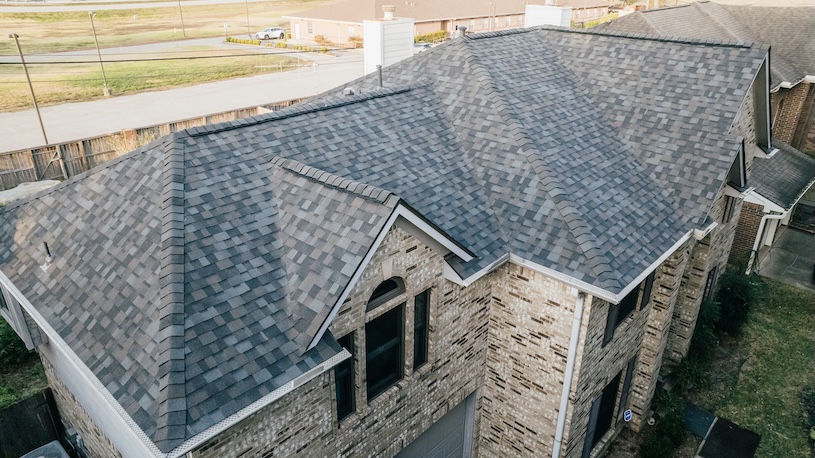
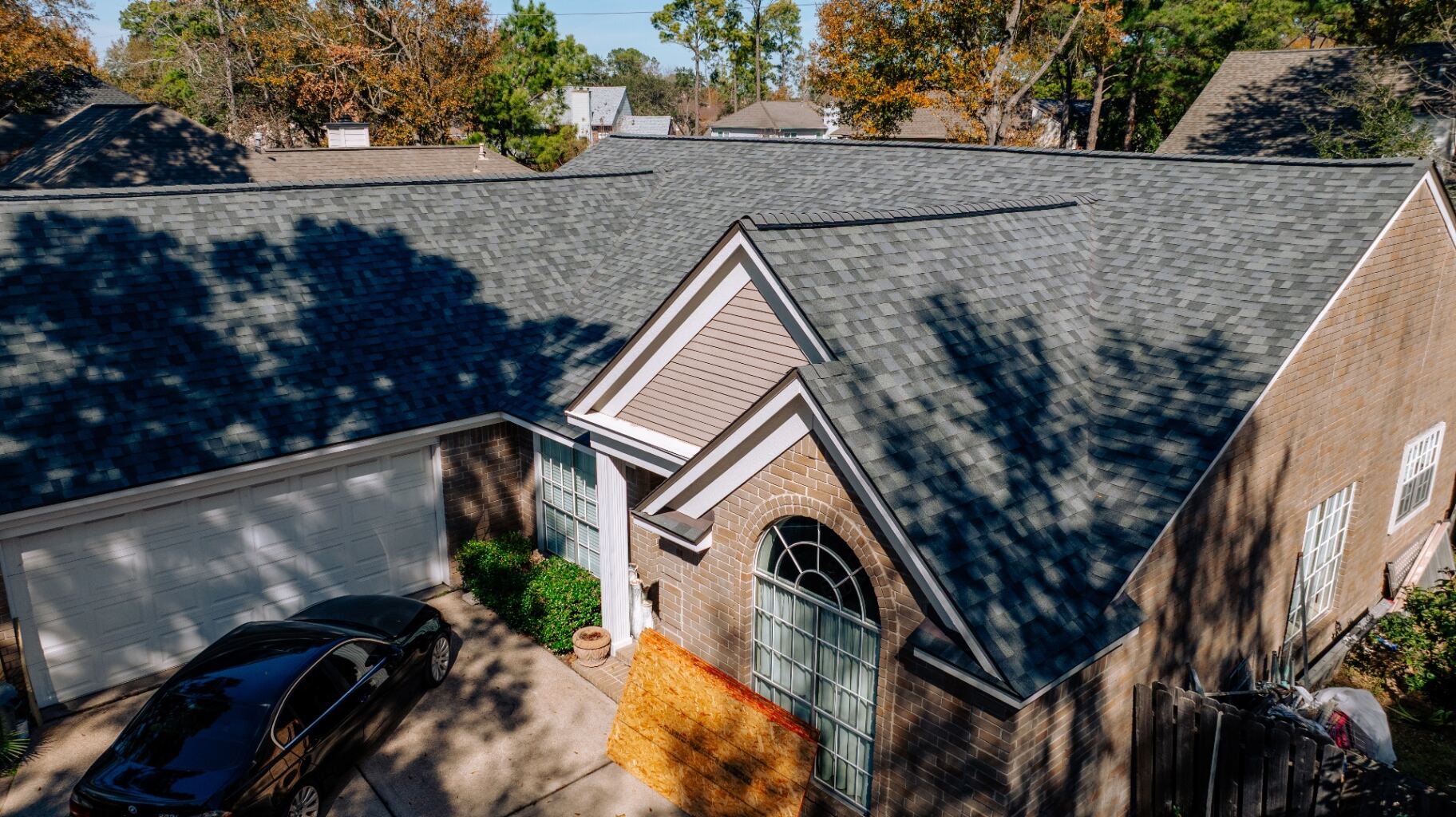
The line between "repair this one slope" and "replace the whole roof" is rarely a single dramatic failure. It is usually three or four smaller signs adding up. A leak at one penetration is repairable. A leak plus heavy granule loss plus lifted tabs across two elevations on a 17-year roof is replacement territory. This guide gives you the seven signs we use on every Houston inspection, what each one means on its own, and how the combination changes the answer. Use it to assess your own roof from the ground before you call anyone.
- Single biggest sign?
- Age combined with granule loss. A 15+ year shingle roof with heavy granules in the gutters is at end of life regardless of how it looks from the curb.
- Can a leak always be repaired?
- Yes, but on a 17+ year roof a repair buys 2 to 3 years before another leak appears somewhere else. Repair vs replace is a math problem.
- Storm damage always means replacement?
- No. Localized damage on a young roof is a repair. Widespread damage on an aging roof is a full insurance-covered replacement.
- How do I avoid being upsold?
- Get two free inspections. Any honest contractor will tell you when repair is the right answer. Be wary of pressure to sign same-day.
Free inspection for your does my houston roof need replacement? project
Tell us what you are dealing with and we will schedule a no obligation inspection. Prefer to talk? Call (713) 480-8877.
01 // Age relative to material
Asphalt architectural shingles last 15 to 22 years in Houston. 3-tab shingles last 10 to 14. Metal lasts 40 to 60. Tile lasts 40 to 50 on the tile, 25 to 30 on the underlayment beneath. If you are inside the bottom of that range and seeing other signs, the answer leans replace. If you are above the top of the range, the answer is almost certainly replace regardless of how it looks. Pull your closing paperwork or HOA records to confirm install year if you do not remember.
02 // Granules in the gutters and downspouts
Shingles shed their granules as they age. Light shedding for the first few years after install is normal (manufacturing release). Heavy shedding (a layer thick enough to feel like coarse sand at the base of downspouts) on a roof past year 12 means the asphalt mat is losing its UV protection. Once mat exposure is widespread, the rest of the failure timeline accelerates from years to months.
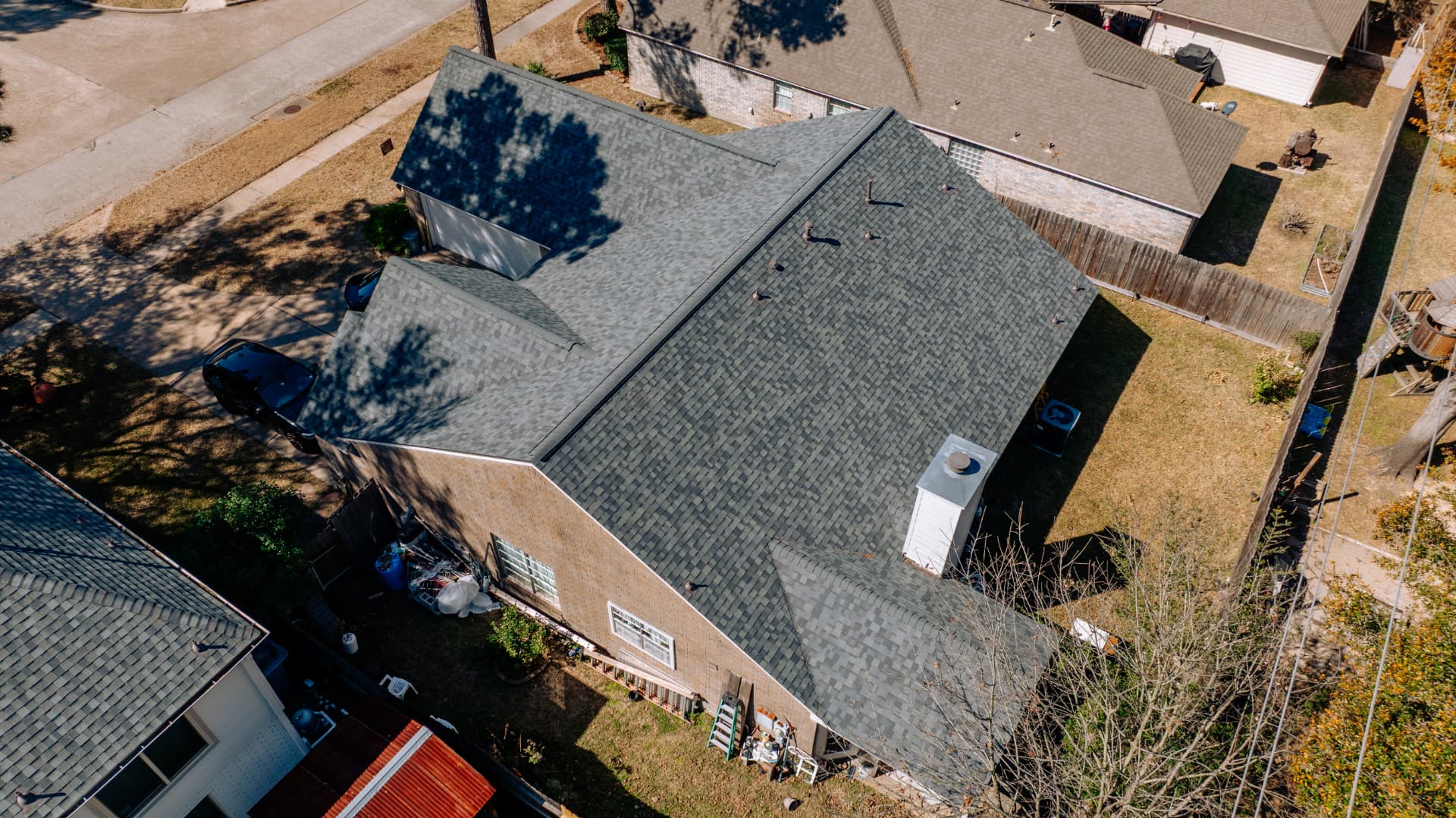
03 // Dark patches in the shingle field
Look at each elevation from the curb with binoculars. Granule-coated shingle is uniform in color. Where granules have washed off, the black or dark grey asphalt mat shows through. Patches larger than a dinner plate, especially clustered on south or west slopes, indicate localized end of life. A few small patches can be repaired. Patches on multiple elevations means full replacement.
04 // Lifted, curled, or missing tabs
Asphalt shingles have a thermoset adhesive strip that bonds each tab to the one below. Houston UV and thermal cycling break that bond over time. Once a tab lifts, the next 60 mph gust folds it back. Scattered lifted tabs are a repair (re-seal with asphalt cement). Lifted tabs across whole elevations means the adhesive system is gone everywhere and full replacement is the only honest answer.
05 // Multiple leak points or repeat leaks
A first leak at a single penetration is a repair. A leak at a penetration that returns within 2 years, or a new leak in a different spot within the same year, signals systemic failure. Pipe boots, flashings, and underlayment all reach end of life at roughly the same time on a roof, and once one fails the others are usually within 12 to 18 months. Replace if you have had two or more independent leak events in 24 months.
06 // Visible sag, soft spots, or daylight in the attic
Sag in the roof line viewed from across the street, soft spots underfoot when a contractor walks the roof, or daylight visible through the deck from inside the attic all indicate decking failure. Decking is plywood or OSB under the shingles and it does not show on a curb inspection. Once decking is wet, soft, or delaminated, the roof needs to be torn off and the decking replaced before anything else goes on. This is replacement, not repair.
07 // Documented storm damage on an older roof
Hail or wind damage on a 5-year roof is usually a partial repair under your insurance policy. Hail or wind damage on a 17-year roof is usually a full replacement under your insurance policy, because the carrier will not pay to patch a roof that needs replacement in 3 years anyway. If you have documented storm damage and your roof is past 15 years, get the claim filed and let the insurance economics decide. Our hail size guide covers what qualifies.